
What Is Concrete Stamping? Transform Your Outdoor Space
Refreshing an outdoor space often means weighing style against cost and maintenance in Northern Virginia. Stamped concrete gives homeowners the look of natural materials like stone, brick, and wood without the pricing or upkeep those surfaces demand. With so many pattern and color choices, it becomes easy to create a unique area that matches your home’s design. Discover how stamped concrete transforms ordinary patios and walkways into lasting, eye-catching features while sidestepping common misconceptions.
Table of Contents
Key Takeaways
Point | Details |
Concrete Stamping Overview | Concrete stamping is a decorative technique that mimics natural materials, providing various design options for personalized outdoor spaces. |
Maintenance Essentials | Regular cleaning and resealing every 2-3 years can enhance the durability and appearance of stamped concrete surfaces. |
Comparison with Alternatives | Stamped concrete offers superior design flexibility and cost-effectiveness compared to traditional materials like natural stone and pavers. |
Installation Best Practices | Ensure proper surface preparation and hiring experienced contractors to avoid common installation mistakes that can compromise quality. |
Defining Concrete Stamping and Common Myths
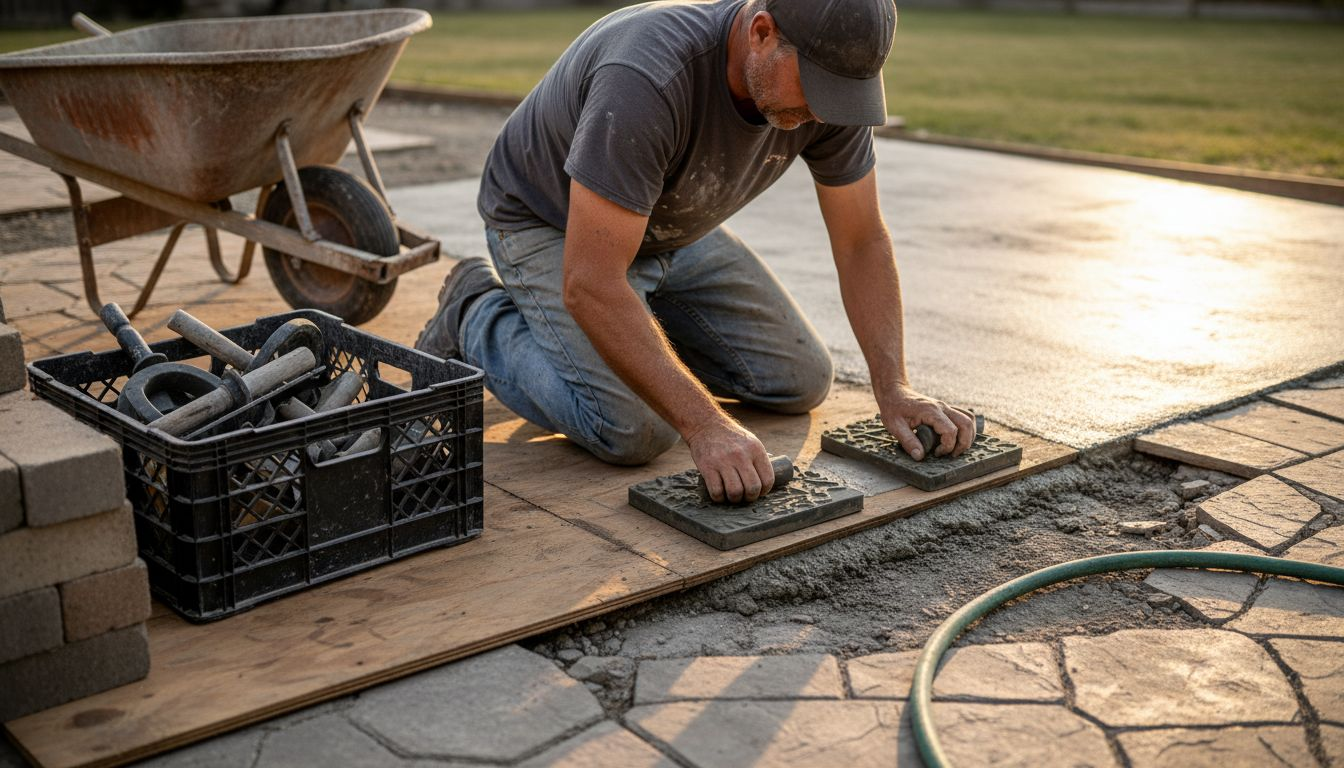
Concrete stamping is a sophisticated decorative technique that transforms plain concrete surfaces into stunning architectural features resembling natural materials. Originating from ancient Roman techniques, modern stamped concrete uses advanced tools and color strategies to create intricate patterns that mimic brick, slate, stone, tile, and wood textures.
The process involves pressing specialized molds or stamps into freshly poured concrete before it fully hardens, creating detailed impressions that provide both aesthetic appeal and textural complexity. Homeowners can choose from numerous design patterns ranging from elegant cobblestone to rustic wood grain, allowing for personalized outdoor space transformations that complement existing architectural styles.
Despite its versatility, several persistent myths surround stamped concrete. Contrary to popular belief, professionally installed stamped concrete is not inherently slippery, prone to rapid fading, or destined to crack easily. High-quality installations actually provide durable surfaces that maintain their visual appeal for years when properly maintained. Modern coloring techniques also ensure rich, long-lasting color that integrates throughout the concrete rather than simply sitting on the surface.
Pro tip: Select stamped concrete patterns that harmonize with your home’s existing architectural style for the most cohesive and visually appealing outdoor design.
Popular Designs, Colors, and Material Imitations
Stamped concrete offers an extraordinary range of design possibilities, enabling remarkable material imitations that transform ordinary surfaces into visually stunning architectural elements. Homeowners can choose from an impressive array of patterns that convincingly replicate natural materials, providing the aesthetic beauty of expensive surfaces at a fraction of the cost.
The most popular design patterns include wood grain, which creates a warm, rustic appearance perfect for patios and walkways; cobblestone, which offers an elegant European-inspired look; slate textures that provide a sophisticated, natural stone appearance; and brick patterns that deliver classic architectural charm. Each design can be customized with color variations that enhance the realism and complement existing outdoor environments.
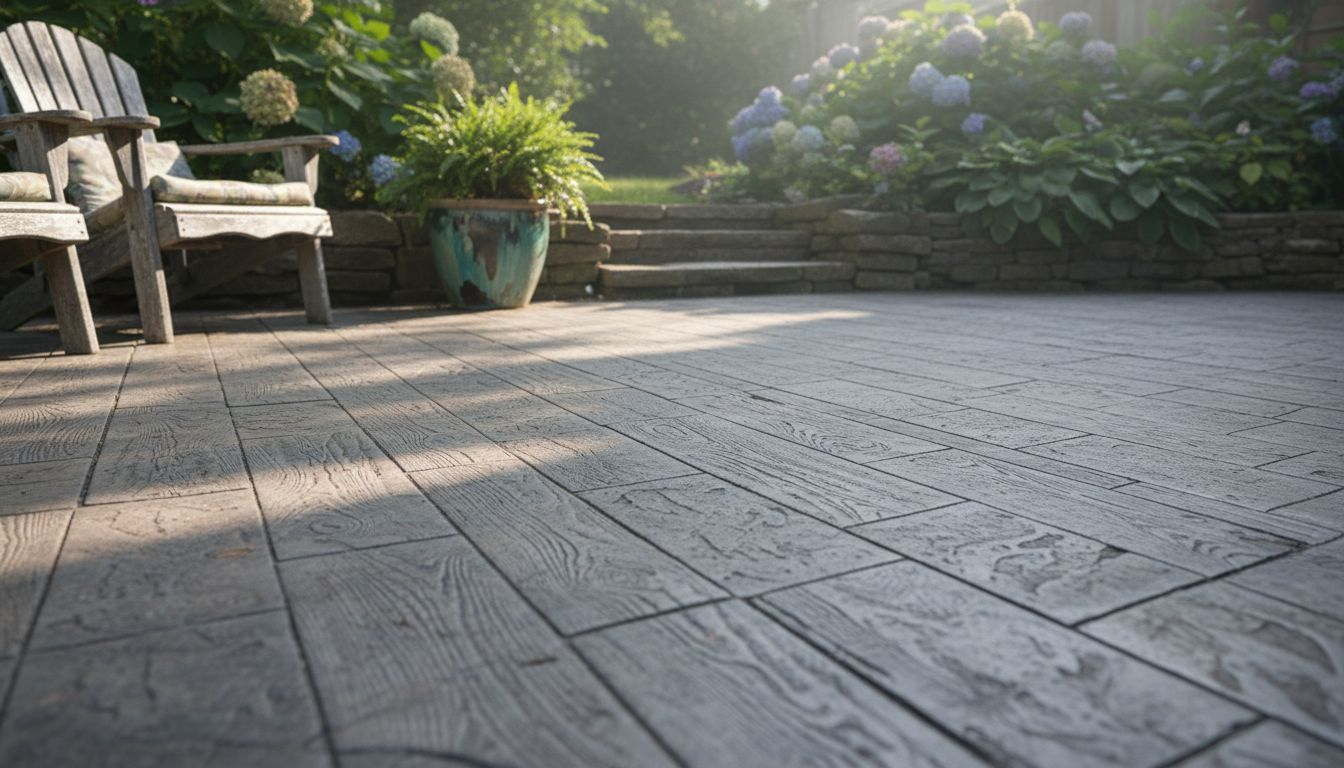
Color application in stamped concrete is a nuanced art form, with two primary techniques: integral coloring and surface color hardeners. Integral coloring involves mixing pigments directly into the concrete mix, creating a consistent color throughout the material. Surface color hardeners, applied after stamping, provide more vibrant and varied color options, allowing for intricate color blending and more dramatic visual effects. These techniques enable homeowners to create truly unique outdoor spaces that reflect their personal style and architectural preferences.
Pro tip: Request color samples and full-scale pattern demonstrations before finalizing your stamped concrete design to ensure the pattern and color perfectly match your vision.
How the Stamping Process Works Step by Step
Stamped concrete installation is a meticulous process that requires precision and expertise. Concrete stamping techniques involve several critical stages that transform ordinary concrete into a decorative masterpiece. The process begins with thorough surface preparation, which includes cleaning the area, creating appropriate grading, and establishing sturdy formwork to contain the concrete pour.
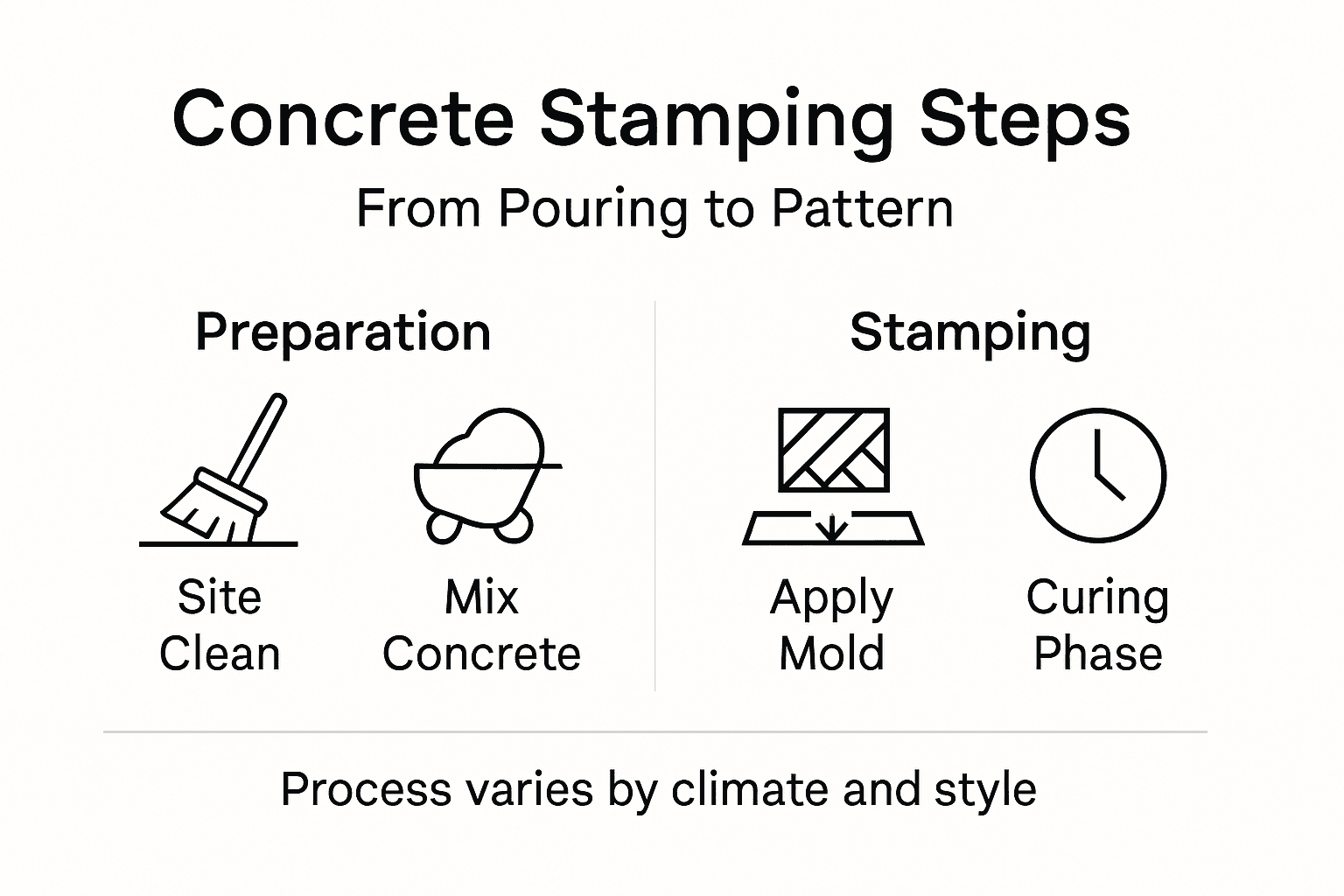
Once the site is prepared, contractors mix concrete to specific specifications, ensuring the right consistency and strength. The concrete is then carefully poured and evenly distributed across the designated area. Timing is crucial during the stamping phase – the concrete must be soft enough to accept impressions but firm enough to hold the pattern. Specialized stamping tools made of rubber, plastic, or metal are strategically pressed into the surface, creating intricate designs that mimic natural materials like stone, brick, or wood.
After the stamping is complete, the concrete enters a critical curing phase. Depending on climate conditions, this typically takes 24 to 48 hours, during which the surface is protected and allowed to set properly. The final steps involve applying color hardeners or release agents that enhance the pattern’s depth and visual interest. A protective sealer is then applied, which not only enhances the concrete’s appearance but also provides crucial protection against wear, stains, and environmental damage.
Pro tip: Schedule your stamped concrete installation during mild weather conditions to ensure optimal curing and pattern definition.
Maintenance, Durability, and Expected Costs
Stamped concrete offers remarkable durability and long-term value for homeowners seeking attractive outdoor surfaces. Stamped concrete advantages demonstrate its ability to withstand heavy foot traffic, harsh weather conditions, and chemical exposure when properly installed and maintained.
Maintenance requirements for stamped concrete are surprisingly straightforward. Regular cleaning with mild detergent and water helps preserve the surface’s appearance, while periodic resealing every 2-3 years protects against stains, fading, and wear. Homeowners should avoid using harsh chemical cleaners or deicing salts that could damage the decorative surface. Minor repairs can typically be addressed quickly, preventing small issues from developing into more significant problems that might compromise the concrete’s structural integrity.
Below is a summary of key maintenance practices and benefits for stamped concrete:
Maintenance Task | Purpose | Frequency |
Gentle cleaning | Remove dirt and debris | Monthly |
Resealing | Protect color and finish | Every 2-3 years |
Prompt minor repairs | Prevent cracks/structural loss | As needed |
Avoid harsh chemicals | Preserve decorative surface | Ongoing precaution |
Cost considerations for stamped concrete are often more favorable compared to alternative materials like natural stone or individual pavers. While initial installation expenses might be slightly higher than plain concrete, the long-term value becomes apparent through reduced maintenance costs and enhanced aesthetic appeal. Pricing typically ranges from $8 to $20 per square foot, depending on design complexity, color variations, and regional labor rates. Factors influencing cost include pattern intricacy, number of colors used, and the specific stamping techniques required to achieve the desired finish.
Pro tip: Request multiple quotes and ask to see previous installation portfolios to ensure you’re getting both competitive pricing and high-quality craftsmanship.
Comparing Stamped Concrete to Alternatives
Homeowners considering outdoor surface options will find stamped concrete a compelling choice that offers unique advantages over traditional materials. Concrete alternatives comparison reveals that stamped concrete provides superior design flexibility and cost-effectiveness compared to natural stone, brick, and individual pavers.
Unlike traditional pavers, which create multiple potential weed-growing gaps and require individual piece replacement, stamped concrete delivers a seamless, continuous surface that minimizes maintenance challenges. Brick and stone alternatives often come with significantly higher material and installation costs, whereas stamped concrete can mimic these high-end looks at a fraction of the price. The ability to customize color, pattern, and texture makes stamped concrete particularly attractive for homeowners seeking a personalized outdoor aesthetic that perfectly complements their existing landscape and architectural style.
Each alternative material presents unique trade-offs. Pavers offer easy replacement of individual damaged sections but create uneven surfaces over time. Natural stone provides exceptional durability but comes with premium pricing. Stamped concrete strikes an optimal balance – providing aesthetic versatility, reasonable durability, and cost-effectiveness. The continuous surface prevents weed growth, reduces settling issues, and creates a unified look that can dramatically enhance property value and visual appeal.
Here’s how common outdoor surface materials compare:
Material Type | Aesthetic Flexibility | Maintenance Effort | Typical Cost per Sq. Ft. |
Stamped Concrete | Highly customizable | Low | $8 - $20 |
Natural Stone | Limited by stone choice | Moderate to high | $20 - $40 |
Brick Pavers | Moderate variety | Moderate | $12 - $24 |
Plain Concrete | Minimal design options | Low | $6 - $10 |
Pro tip: Consider your specific climate, maintenance capabilities, and long-term budget when selecting between concrete and alternative outdoor surface materials.
Mistakes to Avoid with Stamped Concrete
Stamped concrete installations can quickly become costly nightmares when homeowners and inexperienced contractors overlook critical details. Common concrete installation mistakes often emerge from rushed processes, inadequate preparation, and technical oversights that compromise the final product’s appearance and durability.
The most significant errors typically occur during the critical preparation and application phases. Insufficient surface preparation can lead to uneven concrete surfaces, while improper timing during the stamping process can result in weak or distorted impressions. Contractors must carefully manage concrete consistency, ensuring the material is neither too wet nor too dry when applying stamps. Equally crucial is the even application of color hardeners and release agents, which prevent stamps from sticking and create depth and nuance in the final design.
Technical precision is paramount in stamped concrete projects. Failing to follow proper curing protocols can lead to premature cracking, while skipping or inadequately applying protective sealants exposes the surface to environmental damage and rapid deterioration. Color selection requires careful consideration – mismatched or unrealistic color choices can make stamped concrete appear artificial and detract from the intended aesthetic. Professional installation becomes essential, as experienced contractors understand the subtle techniques required to create seamless, natural-looking surfaces that withstand time and usage.
Pro tip: Always request detailed portfolio examples and check references before hiring a stamped concrete installation professional to ensure high-quality craftsmanship.
Elevate Your Outdoor Space with Expert Stamped Concrete Solutions
Transforming your outdoor areas with stamped concrete can be challenging without the right expertise. Common concerns like achieving seamless patterns, ensuring long-lasting durability, and selecting the perfect color to match your home’s architectural style are all critical. At BNTS Construction, we specialize in creating stunning stamped concrete patios, foundations, and custom masonry work that not only mimic natural materials beautifully but also stand the test of time.
Don’t settle for ordinary concrete when you can enhance your property with personalized designs and professional craftsmanship. Our experienced team understands every step of the stamping process ensuring proper surface preparation, precise stamping, and expert sealing for lasting appeal. Visit us now at https://bntsconstruction.com to discover how our stamped concrete services can bring your vision to life. Take the first step toward a durable and elegant outdoor transformation today.
Frequently Asked Questions
What is concrete stamping?
Concrete stamping is a decorative technique that creates detailed impressions in freshly poured concrete to mimic the appearance of natural materials like stone, brick, wood, and tile.
How does the concrete stamping process work?
The process involves preparing the surface, pouring the concrete, and then pressing specialized stamps into the concrete before it hardens. After finishing, the surface is cured, colored, and sealed for protection.
What are the benefits of using stamped concrete over traditional materials?
Stamped concrete offers design flexibility, lower maintenance, and a seamless surface, minimizing issues like weed growth that can occur with pavers. It also provides the aesthetic appeal of high-end materials at a lower cost.
How do I maintain stamped concrete?
Maintaining stamped concrete involves regular cleaning with mild detergents, resealing every 2-3 years, addressing minor repairs promptly, and avoiding harsh chemicals that could damage the decorative surface.
Recommended
Comments